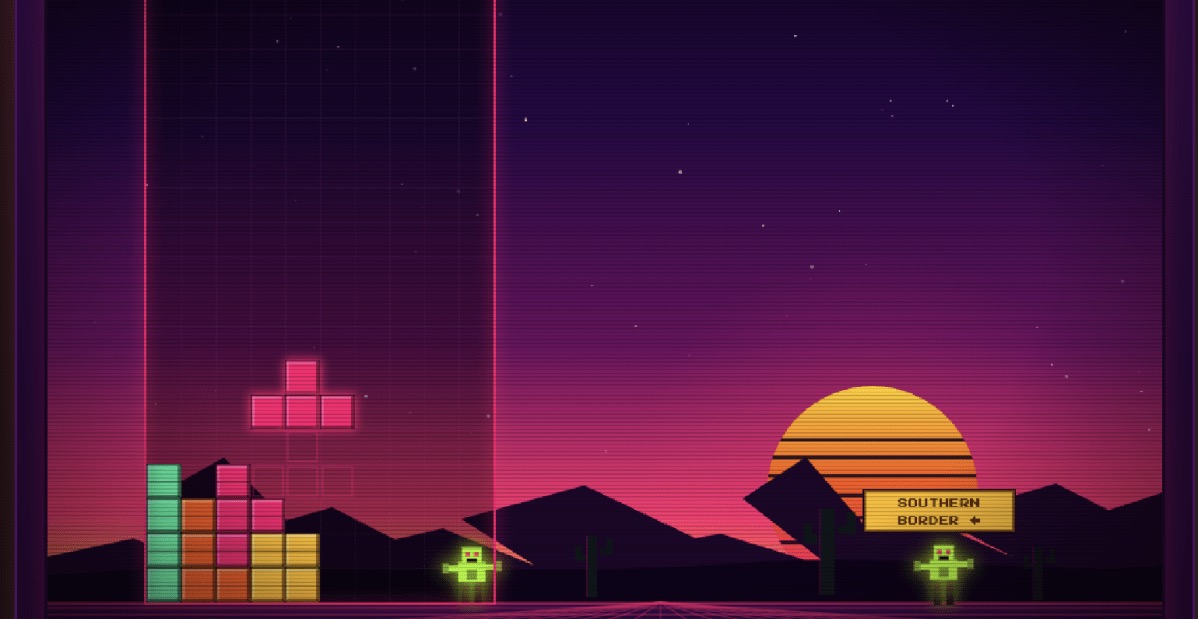
The White House this week shipped six browser-based arcade games built around the administration's policy priorities. One of them, 'Build the Wall,' asks players to stack falling blocks into a border wall to stop what the game calls a 'zombie border siege' — a mechanic lifted almost brick-for-brick from Tetris.
The Tetris Company noticed. In a statement to The Verge, spokesperson Kerri Brusca said the company 'was not involved in the creation of Build the Wall' and 'did not authorize or license the Tetris brand or intellectual property' for it. 'We are currently reviewing the matter,' the company added, after first posting on Instagram that it 'takes copyright infringement very seriously.'
Tetris isn't the only IP the White House borrowed without asking. Other games in the batch echo Sega, Nintendo, Xbox, and the Flappy Bird Foundation's branding and mechanics, according to reporting from The Verge and Engadget. None of those companies had responded to comment requests at publication time.
This isn't the administration's first run-in with copyright law. The Department of Homeland Security has previously had to delete posts — including Halo-themed memes used to promote ICE recruitment — after receiving DMCA takedown notices, per The Verge's reporting.
The games themselves are unmistakably political. 'Rio Run' has a Border Patrol agent snake-sprite collecting migrants as it moves across the screen. 'Flappy Bill' has a bald eagle delivering legislation to the National Mall. 'Supply Line' has players knocking processed foods off a conveyor belt before they reach schoolchildren. The Verge, which broke much of this reporting, called the border-wall game outright racist in its own coverage — a characterization the White House has not addressed.
Here's the thing. Whatever you think of the policy messaging, the copyright problem is the cleaner story. A government website — funded by taxpayers — cloned a private company's game mechanics, slapped a political message on top, and pushed it out under the presidential seal, all without a license. That's not a partisan complaint; it's a property-rights one, and it's the kind of casual disregard for someone else's IP that would draw a cease-and-desist letter from any law firm in America if a private studio tried it.
Tetris says it's 'reviewing the matter,' which is corporate-speak for 'lawyers are reading this too.' If the administration wants to keep making memes at the expense of Sega, Nintendo, and Xbox, it might want to budget for the DMCA notices along with the border wall. The demo is not the product, and apparently neither is the disclaimer.