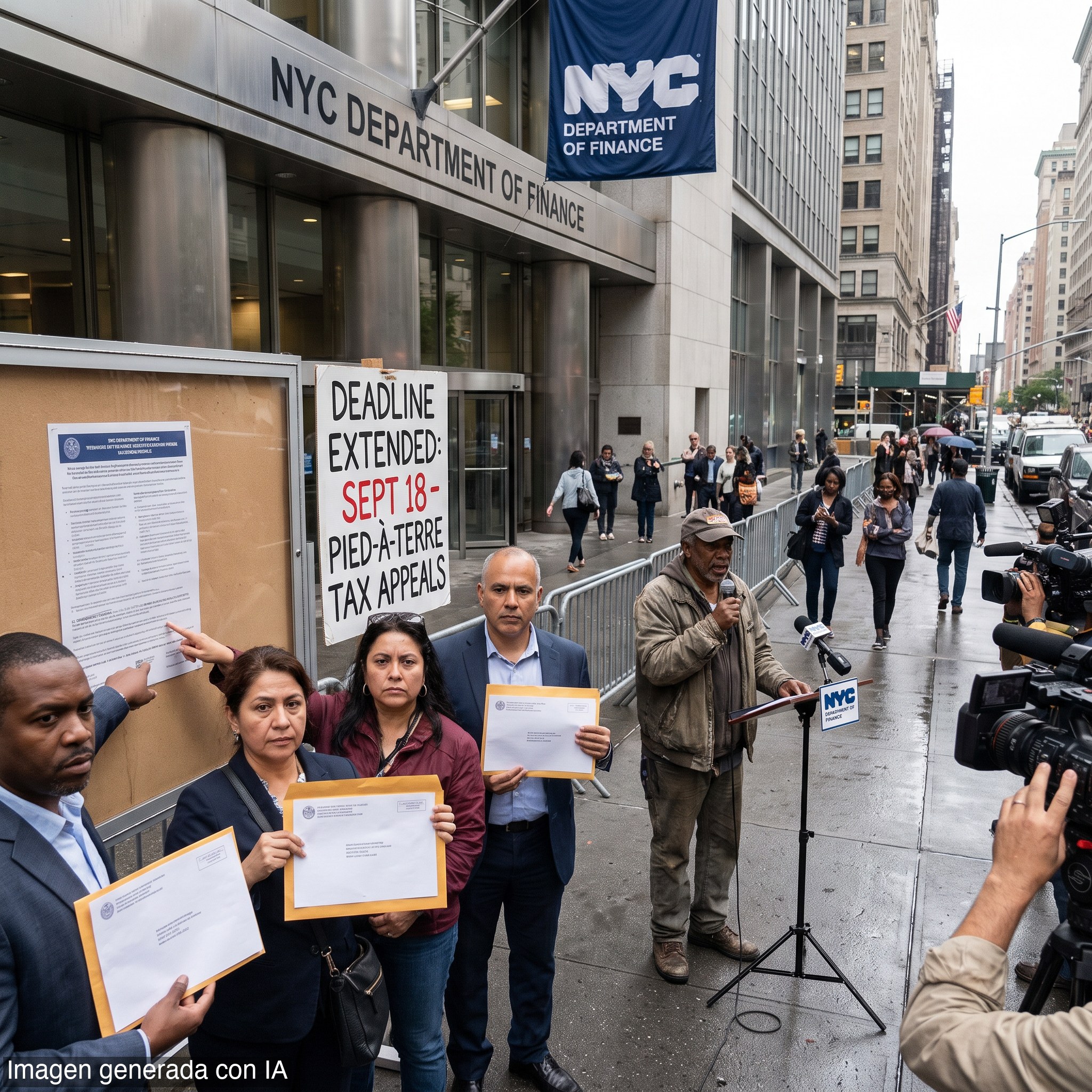
Here's the thing. When you design a tax and then accidentally mail five-figure bills to thousands of full-time residents who were never supposed to be on the hook, you do not get to call the resulting panic 'backlash.' You call it a rollout failure.
Mayor Zohran Mamdani announced Saturday that property owners in New York City now have until September 18 to file appeals on the city's new pied-à-terre tax — a month longer than the previous deadlines of August 21 for homes and August 24 for co-ops and condominiums. The extension applies to owners of second, one-to-three-family homes valued over $5 million, and co-ops and condos valued at $1 million or more.
The problem is the math. The city's Department of Finance sent out 17,000 letters alerting property owners they 'may' be subject to the tax. Government officials had previously estimated the surcharge would hit somewhere between 10,000 and 13,000 non-primary residences. That gap — somewhere between 4,000 and 7,000 extra letters — is why the phones started ringing.
Mamdani had spent months insisting the tax would only affect wealthy out-of-towners using New York as a luxury layover. Many full-time residents who received those notices disagreed loudly. The tax itself was approved by the Democratic-controlled state Legislature and signed by Gov. Kathy Hochul this spring, with a projected yield of $500 million for the city budget.
Council Minority Leader David Carr (R-Staten Island) was not impressed by the extension. 'This is really the least this administration can do to begin to fix this train wreck,' Carr said. 'Every homeowner should have ample time to appeal this tax assessment, after they have been properly notified. Giving them less than a month in the middle of the summer is a bad joke.'
The Voltage read: A tax sold as surgical precision — hitting only the rich absentee set — turns out to have the targeting accuracy of a bulk mailer. The administration's answer is an extra month to prove you actually live in your own home. That is not a fix; that is a queue. When the government ships a product this buggy, the burden of proof lands entirely on the taxpayer, not the bureaucracy that miscounted its own install base. The $500 million revenue projection may be real. The political cost of getting there is looking considerably higher.