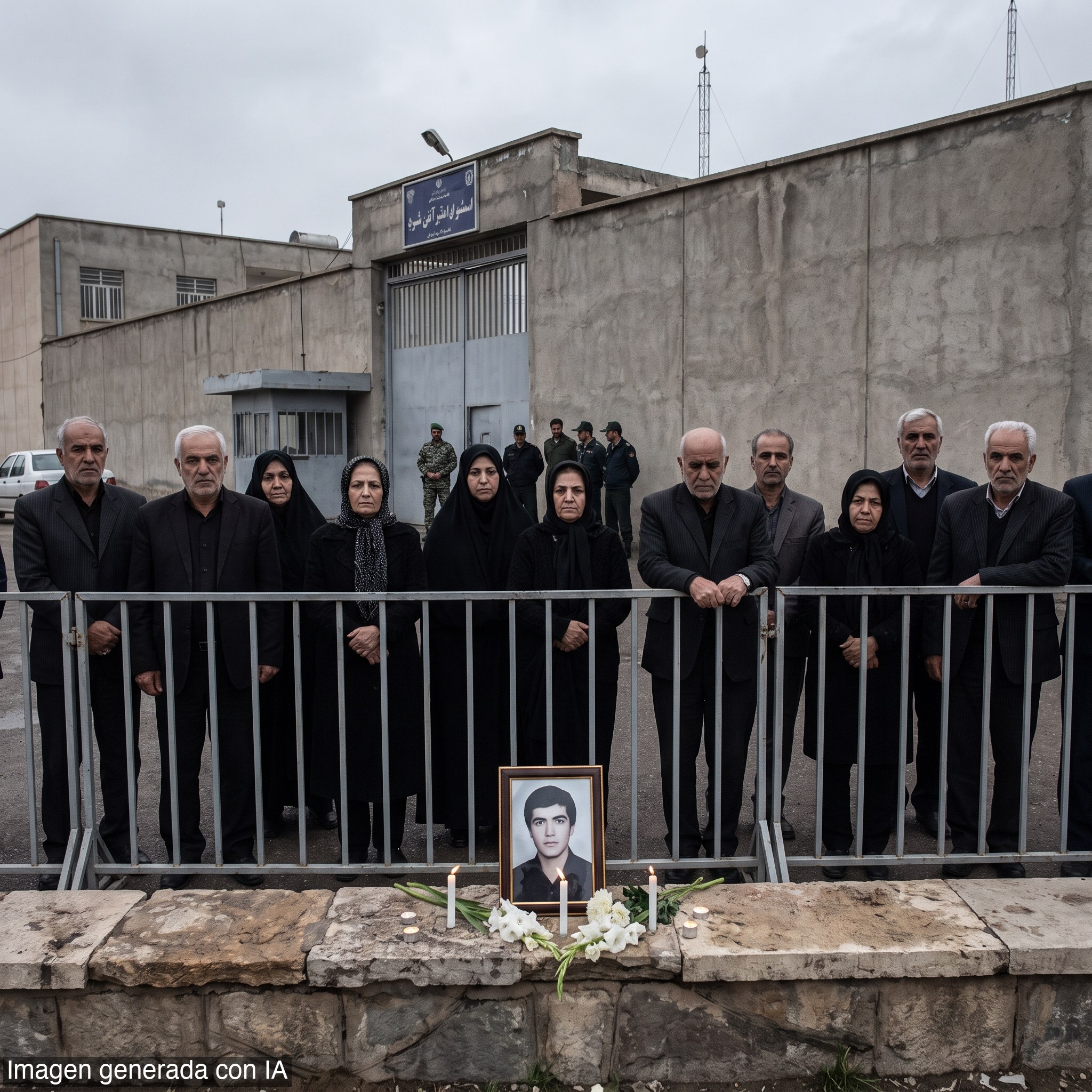
Iran executed 20-year-old Arvin Kheirkhah on Saturday morning at Shahroud prison, UK-based Iran International reported. His crime, according to the Revolutionary Court that sentenced him: waging war 'against God.' His actual offense was joining nationwide street protests against the regime in January.
The communications office of Reza Pahlavi — son of the late Shah — said Kheirkhah's final words to his family were: 'Don't let them forget me. We stood up for the liberation of our homeland. Don't let the path we chose be silenced.' Pahlavi's office has identified six other Iranian citizens it says are 'at risk of execution' by Tehran's judicial system.
His death is not an isolated data point. On July 19, the regime hanged Erfan Esfandiari, 18, and Gol Mohammad Mohammadi, 23, an Afghan national, both arrested in connection with protests on January 8 in Isfahan's Alikhani Square. On Tuesday, two more men from that same crackdown — Abolfazl Sepahi Badjani and Amir Hossein Safari Hosseinabadi — were publicly hanged. According to the National Council of Resistance of Iran, the crowd responded with chants of 'Dishonorable, dishonorable.'
On July 23, UN investigators called on Tehran to halt planned executions for 10 additional men who participated in the Isfahan protests. All 12 were among 59 men arrested that day. The UN Fact-Finding Mission said it 'strongly condemns' the July 19 executions.
Revolutionary Courts have been widely condemned by international watchdogs for relying on charges so vague they function as blank warrants — 'enmity against God,' 'corruption on earth' — language that can be applied to anyone who shows up in the wrong square on the wrong afternoon.
Amnesty International's Heba Morayef put it plainly: 'The Iranian authorities are unleashing a horrifying wave of executions and death sentences to punish and suppress dissent and project an image of strength and absolute control in the wake of the January popular uprising.'
President Trump has said Iran killed as many as 32,000 people during the anti-regime protests that preceded US and Israeli military operations against Tehran in February. Human rights groups put the figure at at least 7,000 killed by Iranian government forces. Trump has since directed additional military strikes following repeated Iranian attacks on commercial shipping and US bases in the region.
Here's the thing. A government that hangs teenagers for attending a protest and calls it theology is not a government engaged in legitimate judicial process — it is a government running a kill list with extra steps. The regime's use of vague religious charges as executable offenses is precisely the architecture of a state that has decided accountability to its own people is a threat to be eliminated. The question now is whether the international community's condemnations carry any weight at all, or whether they function as the diplomatic equivalent of a loading screen — something that appears while nothing actually happens.