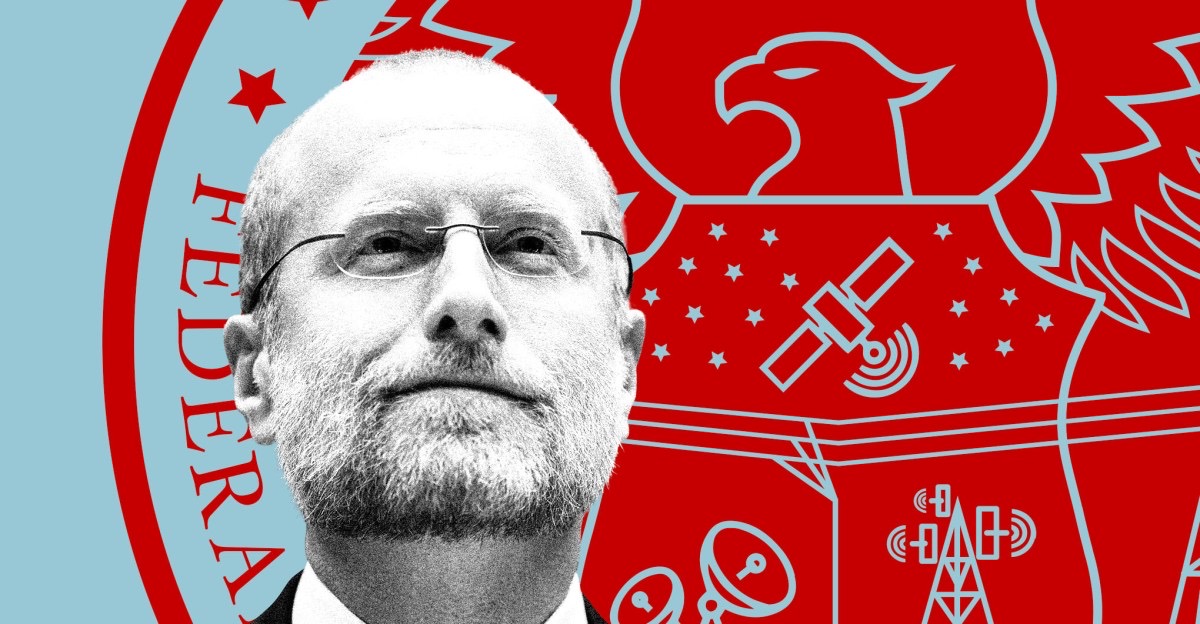
The era of hard limits on how much of America a single broadcast company can own is over. The Federal Communications Commission voted Thursday to repeal the national broadcast TV ownership cap, the rule that since 2004 has barred any single owner from holding stations that collectively reach more than 39 percent of U.S. TV households.
The vote was 2-1 on party lines. FCC Chair Brendan Carr and Republican Commissioner Olivia Trusty voted to end the cap. Democratic Commissioner Anna Gomez dissented.
In place of the fixed ceiling, the FCC says it will now apply 'granular, case-by-case review' to determine whether any given consolidation deal serves the public interest. Carr has long argued the 39-percent rule was an artificial constraint that left broadcasters unable to compete with streaming platforms and social media companies that can reach, in his words, '100 percent of the country' without ever touching a broadcast license.
Critics are not buying it. Gomez put it plainly: 'Eliminating the cap does not free local broadcasters from economic pressure, it just changes who is doing the squeezing. The large station groups positioned to grow even larger under this decision are not local broadcasters, they are national companies that own local stations and increasingly dictate what airs on them.'
Opponents also raise a procedural objection with real legal teeth: the 39-percent figure was written into a 2004 act of Congress, not just an FCC regulation. Matt Wood, general counsel for public interest group Free Press, said in a statement that 'Brendan Carr cannot undo the limit that Congress set just because he feels like it.' Backers of the cap say they plan to challenge the rule change in court.
The FCC has already been operating in the spirit of the new policy before formally voting it in. Carr previously agreed to waive the cap to approve the \$6.2 billion merger of broadcasters Nexstar and Tegna, though a federal judge has since paused that deal pending a challenge by a group of state attorneys general.
The move also lands in a charged political environment: the FCC has simultaneously demanded early renewal of ABC's broadcast licenses — a process the agency linked to an investigation into the company's DEI policies — shortly after President Trump publicly criticized the network.
Voltage's read: Deregulation is usually a win for free enterprise, and the case for letting broadcasters compete on equal footing with unregulated streamers is not frivolous. But 'case-by-case review' by a politically appointed commission is not the same as a rule-of-law framework — it is discretion, and discretion can be wielded in both directions. The legal challenge ahead will test whether an executive agency can simply overwrite a number Congress put in statute. That question matters far beyond broadcasting.