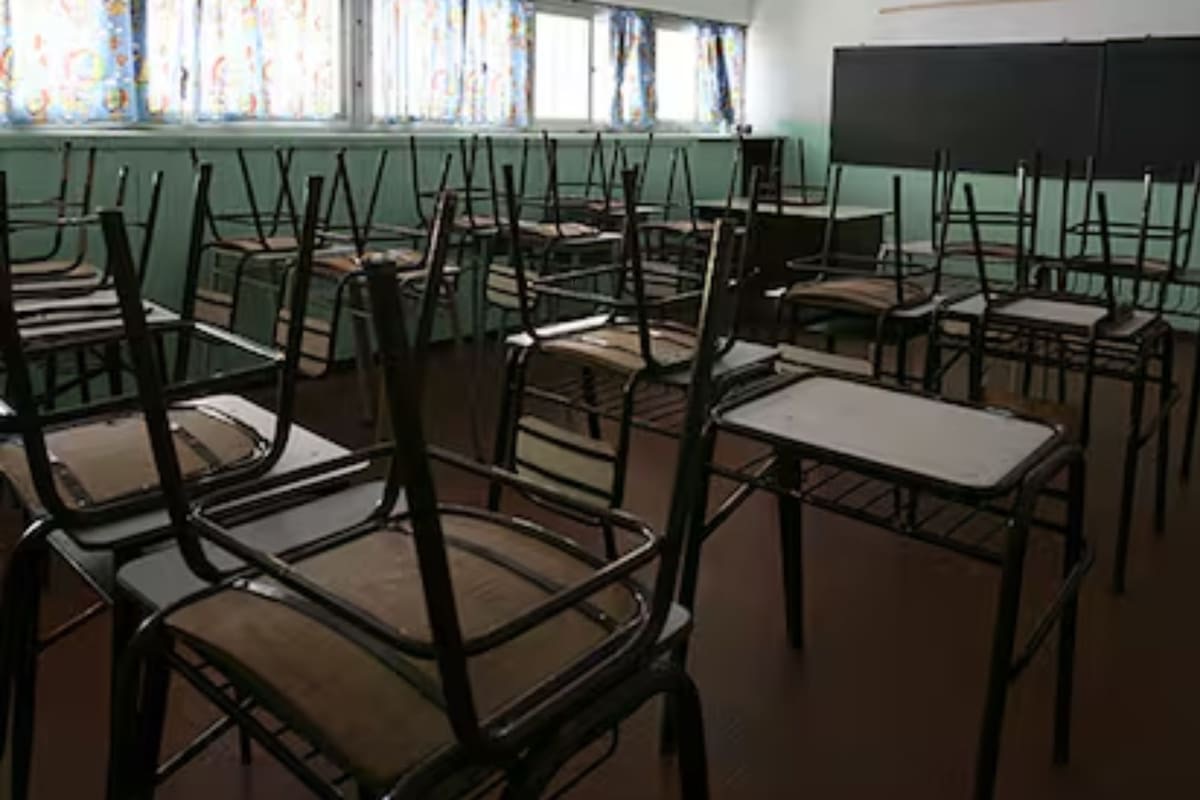
Here's the thing: Argentina's teachers' union called a national strike, and the Milei government responded not with a press release but with inspectors.
The Confederación de Trabajadores de la Educación (Ctera) announced a nationwide work stoppage set to coincide with the return to class in the city and province of Buenos Aires after winter break. The union's stated grievances: the government's 'permanent refusal' to convene the national teachers' wage negotiation (paritaria), plus demands for salary increases, the reinstatement and immediate payment of the Fondo de Incentivo Docente (Fonid), and the passage of a new Education Financing Law.
The Ministry of Human Capital — led by Sandra Pettovello — had already put unions on notice Friday, citing Law No. 27.802, whose Article 101 classifies education as an essential service under the recent labor reform. That classification requires that 75% of normal educational service be maintained during any work stoppage.
On Saturday, the ministry escalated. It announced it would conduct 'sample inspections' at schools across the country on the day of the strike 'to verify that the union entities calling the national strike comply with the 75% threshold of normal educational service delivery.' The statement added that if violations are confirmed, 'protocols will be activated to apply the corresponding sanctions.'
The government also drew a constitutional line: 'School management is a primary responsibility of the jurisdictions, and at the same time, the national government is the guarantor of citizens' right to education,' Capital Humano said, urging all agents of the education system to 'prioritize the right to education of children and youth.'
Ctera, for its part, called on education workers to 'build a massive day of struggle, together with union, student, and community organizations, to defend public schools, the rights of teachers, students, and retirees.'
Voltage's read: The Milei administration is doing exactly what a government committed to rule of law should do — enforcing legislation that already exists rather than negotiating around it. The essential-services classification isn't a political invention; it's statute. What's notable here is the enforcement architecture: inspectors, spot checks, documented sanctions. That's a government that means it. Whether the unions blink or double down will tell you everything about where Argentina's labor reform actually stands in practice, not just on paper. Families waiting to send their kids back to school after winter break deserve that 75% — and so does the law.