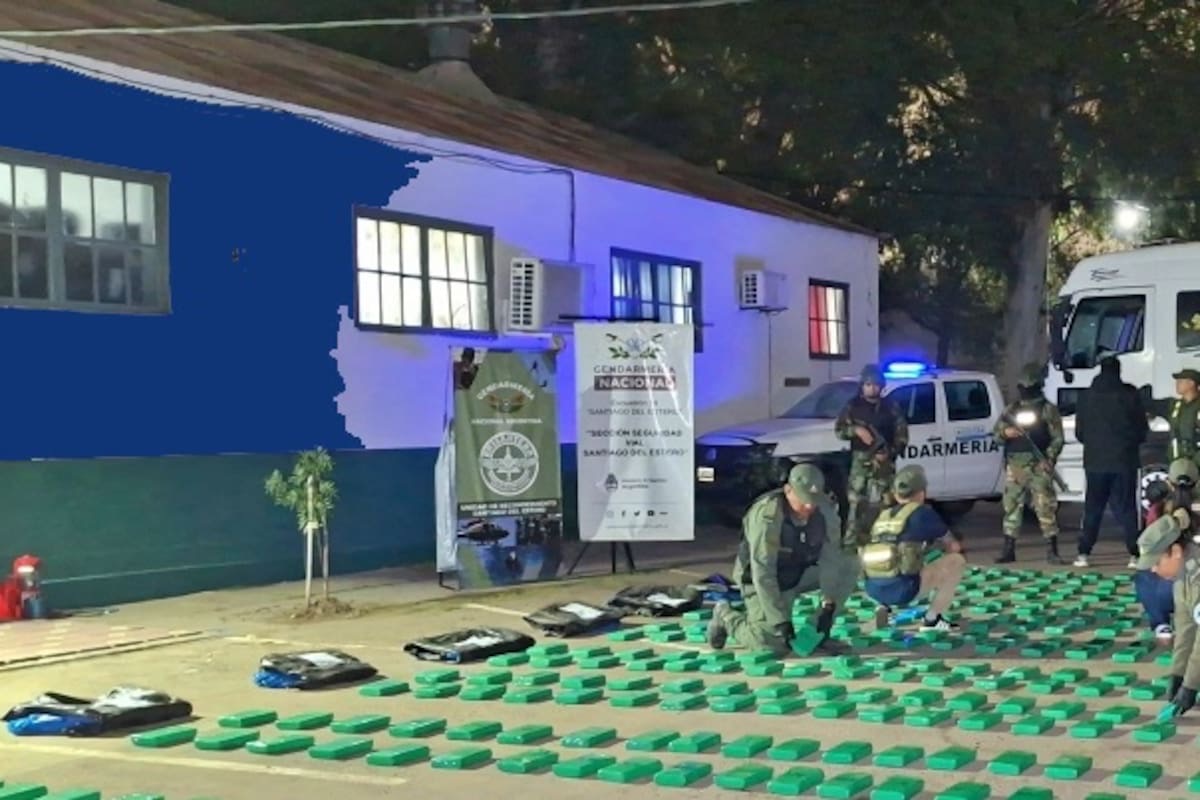
Three trucks. Eight hundred kilos. One very bad week for the cartel.
Argentine federal security forces intercepted three fuel tanker trucks carrying a combined 834 kilos of cocaine in less than seven days, exposing what investigators describe as an emerging logistics method for moving drugs overland from Bolivia toward Buenos Aires.
The biggest single seizure came in Tintina, Santiago del Estero, where Gendarmería officers stopped a tanker that had left a warehouse on the western outskirts of Salta city on July 27. Agents had been tracking the vehicle in an undercover operation run by Procunar, the federal anti-narcotics unit led by federal prosecutor Diego Iglesias. The truck slipped surveillance briefly on a nighttime stretch of Route 5 before being relocated and intercepted. When customs officers at the Dirección General de Aduanas base in La Banda ran a scanner over the vehicle and then cut into the bodywork, they found 446 kilos of cocaine inside a hermetically sealed compartment specifically engineered to defeat drug-sniffing dogs. A trained dog still flagged the vehicle.
A parallel raid on a house in Salvador Mazza — on the Bolivian border — turned dramatic: the suspect's wife threw a package over a neighbor's wall. Inside: US$65,000 in cash and several cell phones. Investigators recovered everything. Judge Julio Bavio issued six-month preventive detention for two men on trafficking charges.
Less than a week earlier, a routine traffic checkpoint near Rafaela, Santa Fe, on kilometer 210 of National Route 34 flagged a Bolivian-registered fuel tanker. Officers found five backpacks loaded with cocaine in the cab. Ten kilometers behind it, a second Bolivian tanker was carrying more. Combined weight: 388 kilos, bound, according to Security Minister Alejandra Monteoliva, 'straight to the streets of Buenos Aires.' Monteoliva put the street value at roughly 9 billion pesos.
The concealment technology is not improvised. Investigators told local media the hermetic hidden-compartment design originated in Colombia and has since been replicated across Latin America. The May precedent — a third tanker seizure closer to the border, netting nearly 113 kilos — suggests the method was already in rotation before this week's spree.
Here's the thing. The Milei administration has leaned hard into security enforcement as a marker of the new order, and these results are concrete: three trucks, one sophisticated concealment system cracked open, two men in pretrial detention, and a logistics chain at least temporarily disrupted. The free-market argument for strong border enforcement has always been that ungoverned supply chains don't just move drugs — they distort every legitimate market they touch, from trucking to fuel distribution. When narcos can rent a tanker fleet as cover, the cost falls on every honest operator who now competes with a subsidized criminal network. Busting the method matters as much as busting the load.