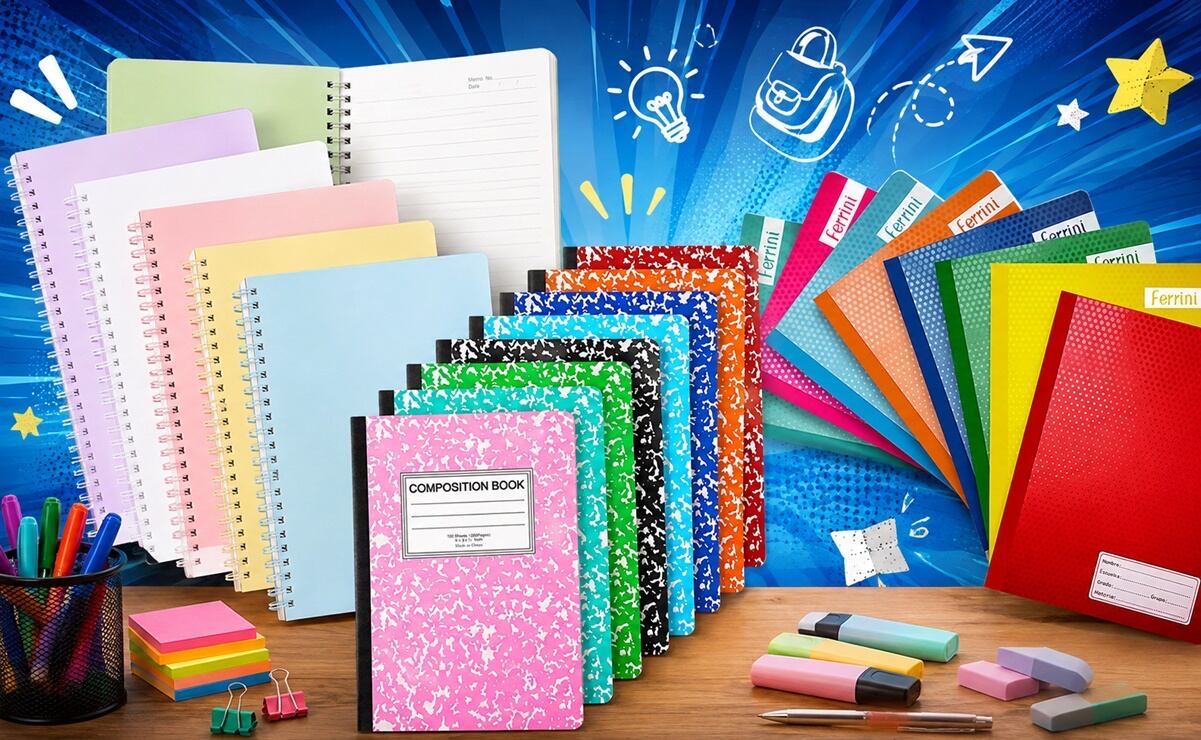
Here's the thing. What landed in our source queue as a 'story' about the 2026–2027 school year is, in practice, a product roundup for spiral notebooks on Amazon México. The byline is real. The affiliate angle is implied. The editorial line between sponsored content and news reporting is, to put it charitably, blurry.
The piece, published by El Universal under its 'Descubre y Compra' vertical, promotes a six-pack of spiral notebooks with 480 pages as a back-to-school essential. It names Amazon México as the destination and promises 'fast shipping so you have everything ready before the first day of class.' No prices are cited in the text we received. No independent testing. No comparison methodology. Just a product name and a platform.
The surrounding 'related content' block — which the source file includes verbatim — is where things get genuinely strange. Sandwiched between the notebook recommendation and a story about bodies found after an avalanche on Broad Peak, Pakistan, sits a piece about mariachi group Garibaldi serenading a songwriter's centennial. The algorithm did not curate this. Nobody did.
This is enshittification in its most legible form: a legacy print brand lending its masthead to what is functionally a product feed, monetizing the trust readers extend to editorial content and converting it into click-through value for a marketplace. The changelog here isn't a new feature — it's a missing firewall.
Nobody asked for this, and more to the point, nobody is well-served by it. Not the reader trying to figure out whether a six-pack of spiral notebooks is actually worth buying. Not the advertiser, whose product now sits next to avalanche fatalities in the content stream. And certainly not the journalists at the same outlet doing actual work.
Voltage does not cover product listings. We are running this item precisely because the form of the content — native advertising dressed as editorial, published under a news URL, indexed like a story — is itself a technology and media policy problem. Platform economics reward this behavior. Display ad revenue collapsed; affiliate links fill the gap. The incentive is structural, not moral.
The principle at stake is straightforward: readers deserve to know when they are reading an ad. A label buried in a vertical name ('Descubre y Compra') does not clear that bar. Regulators in the U.S. and Europe have said as much. The market, left alone, will keep shipping this. It ships when it ships.