The contamination was Mexican. The bill landed on California farmers.
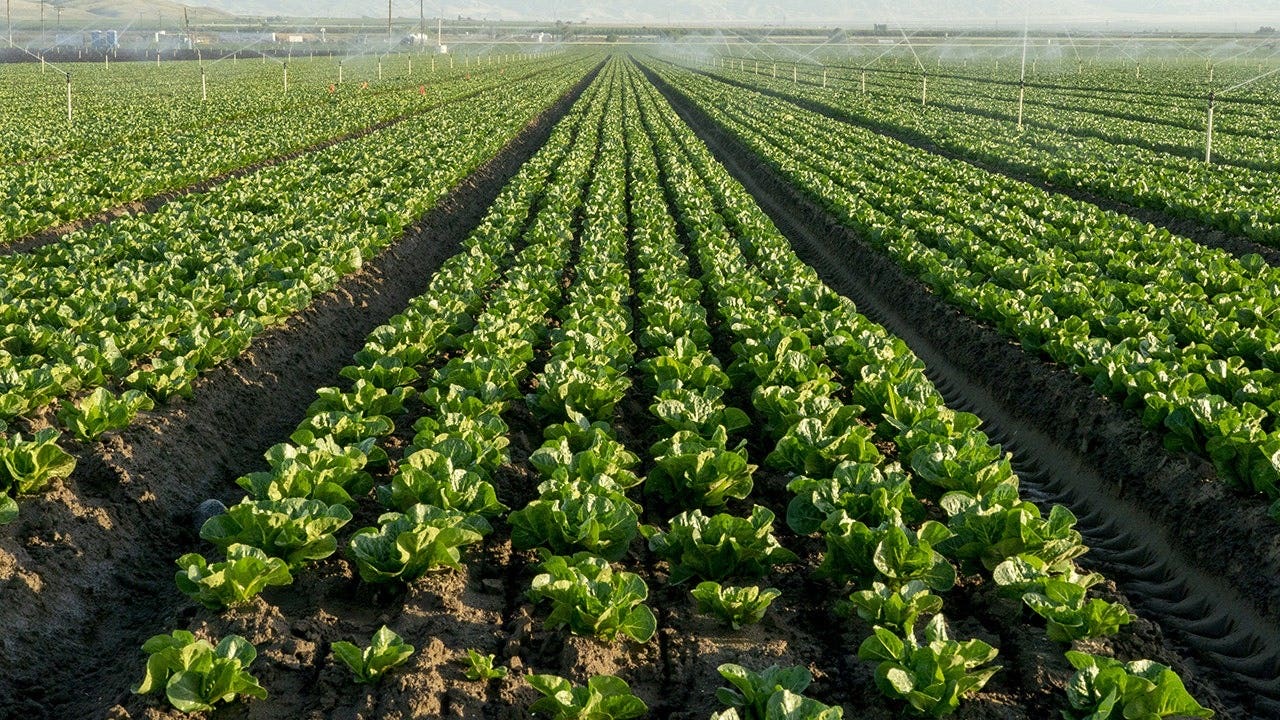
One grower in California's Salinas Valley just chopped up 300,000 pounds of romaine hearts and tilled them back into the ground. No evidence his crop carried the parasite. No recall on his product. Just collateral damage from a public-health scare traced to a completely different supply chain.
That farmer — Cox, of Cox's Coastline Family Farms — supplies major grocery stores and top restaurants across the country. The cyclosporiasis outbreak has cut demand for his greens by as much as 30%. 'I would've been better off taking a vacation in the South of France than planting the crop,' he told the Wall Street Journal.
Here's the thing. The outbreak has been linked to iceberg lettuce sourced from central Mexico and recalled by California-based Taylor Farms — the country's largest lettuce supplier. The CDC reports over 1,600 cases across five Midwestern states. Taylor Farms recalled product in 27 states and halted imports from the region for the rest of the growing season.
But the damage spread far beyond Taylor Farms. Salinas Valley — nicknamed 'America's Salad Bowl' — supplies nearly half of the country's lettuce. When consumers panic, they don't read the fine print on origin labels. 'Consumers aren't sure what's right anymore so, out of an abundance of caution, they're just passing on everything,' said Joelle Mosso, a food scientist at Western Growers, a family farm trade group.
Not every grower is pulling back. Viraj Puri, who founded Gotham Greens in Brooklyn, told the Journal his company opted against reducing seeding despite lagging sales. 'The public health benefits of a diet grounded in fruits and vegetables are indisputable,' he said. 'I really hope consumers can get back to trusting the fruits and vegetables they buy.'
Cox, for his part, is not giving up. 'You can't afford to be downcast very long. You better pick yourself up, dust yourself off and keep pushing forward,' he said.
---
The episode is a clean illustration of how a single point of failure in an import-dependent supply chain can crater an entire domestic industry. American farmers who grew clean product, followed every rule, and built relationships with grocery chains for years are now eating the cost — literally plowing revenue back into the dirt — because a foreign supplier's contamination problem became everyone's reputation problem.
The free market can price risk. What it cannot easily price is guilt by geographic association. The policy question nobody in Washington seems eager to answer is what food-safety standards are actually being enforced at the border for fresh produce, and who picks up the tab when they fail.